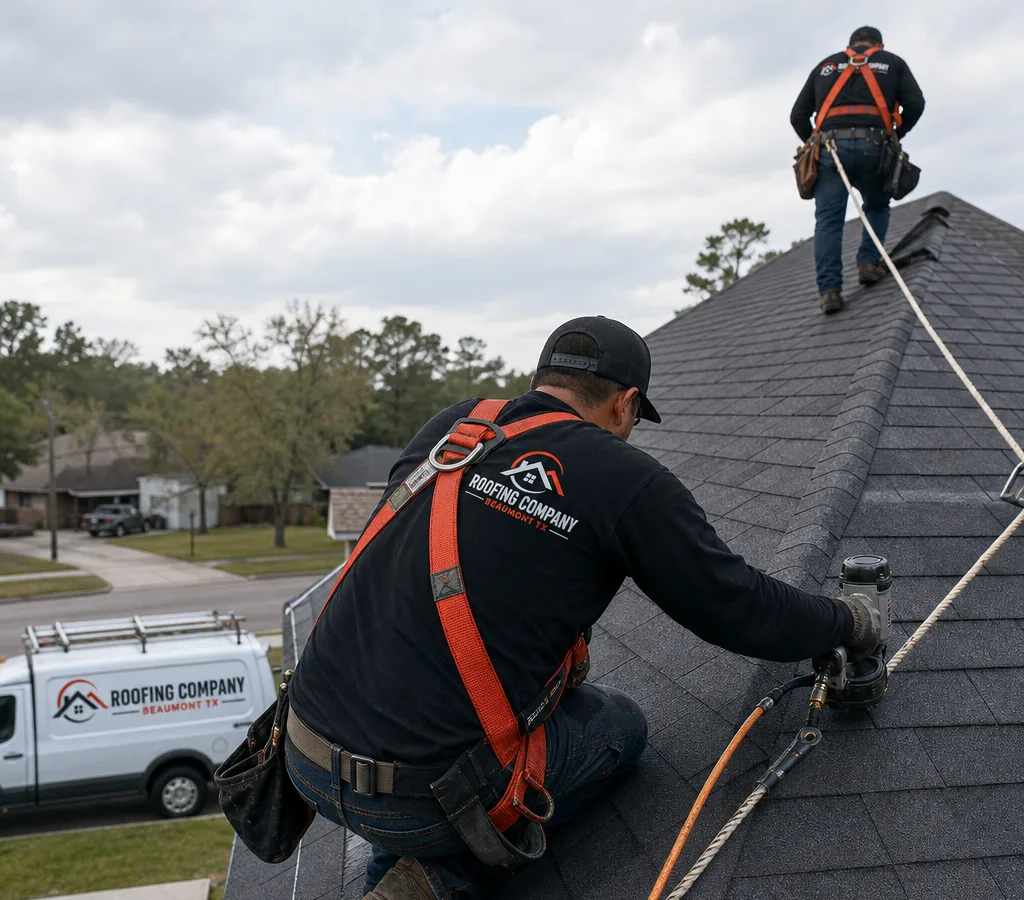
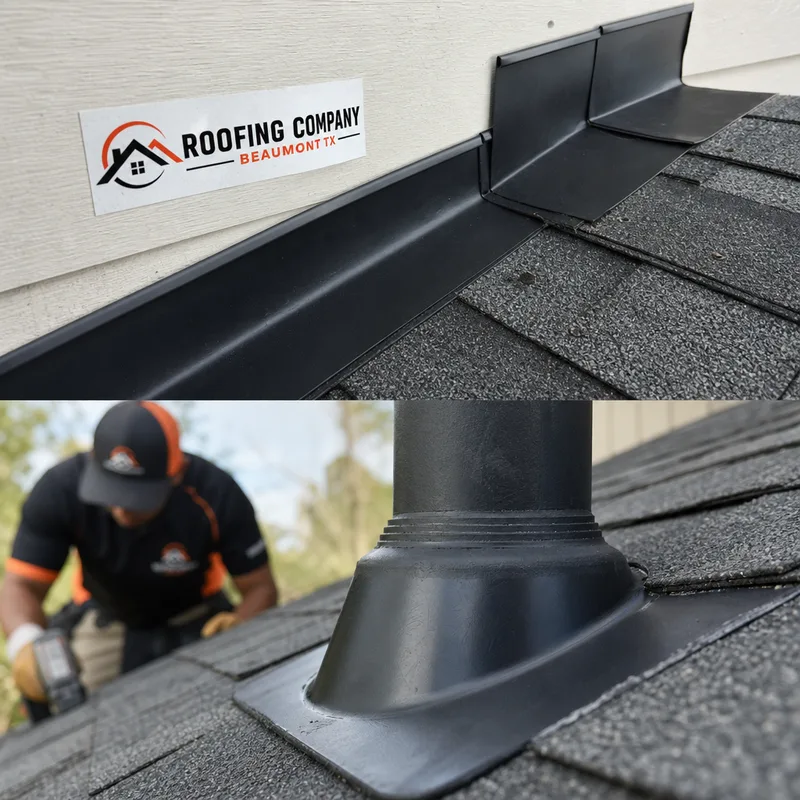
A good roofing decision starts with a real inspection, not a rushed estimate from the driveway. We typically begin by walking the roof, checking penetrations and perimeter edges, and looking closely at the areas that fail first in Southeast Texas conditions: flashing lines, valleys, and transitions around walls and dormers.
You will receive a written scope that explains what is being repaired or replaced, what gets removed, how the roof will be sealed and vented, and what needs to happen around gutters and drip edge. If replacement is the right call, we will talk through material options in plain terms—such as asphalt shingle types, underlayment, and ridge ventilation—and what each choice changes in durability and budget.
We also keep the jobsite practical. That means protecting landscaping, using magnetic sweeps for nails, and leaving you with a clean perimeter when the work is done. If you are near the I-10 corridor and dealing with wind-driven rain, we pay extra attention to edge sealing, starter courses, and properly fastened ridge caps.
Homeowners near older housing pockets such as the Oaks Historic District often have rooflines with more intersections and penetrations, which can increase flashing complexity. On the newer side of town, neighborhoods like West End may have simpler roof geometry but larger surface area, which changes material quantities and staging. Either way, the inspection tells the truth.