
Repair options that fit the roof you have
We match the repair to your roof system and the damage pattern, whether that is replacing a defined shingle field, rebuilding a ridge, or correcting flashing that started the leak.
Serving Beaumont, Texas & surrounding areas.
Storm damage roof repair · Beaumont, Texas
If your roof was hit by wind, hail, or flying debris, we inspect the damage, explain your options in plain language, and restore protection fast with repairs that match your roof system.
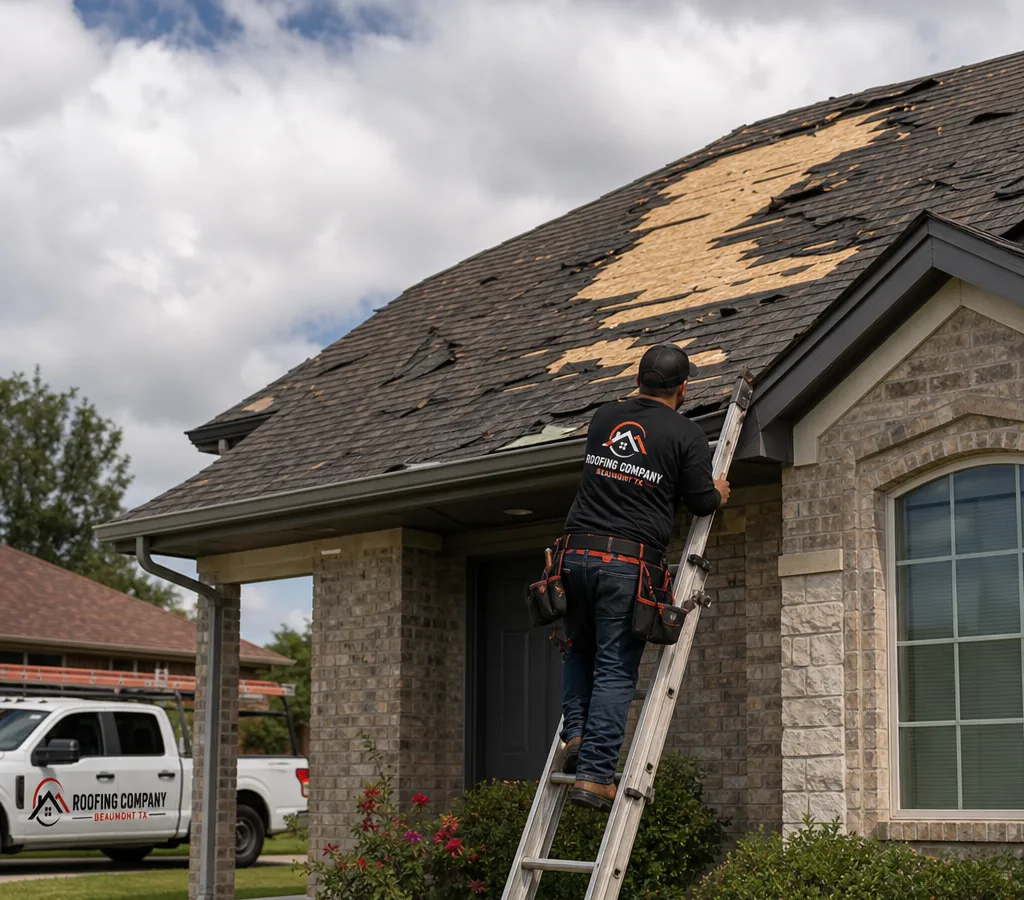
Recognize the warning signs
Storm damage roof repair usually starts with one goal: stop water from getting into your attic and walls before a small issue becomes a ceiling stain, wet insulation, or rot around the decking.
Across Southeast Texas, high winds, wind-driven rain, and hail can cause:
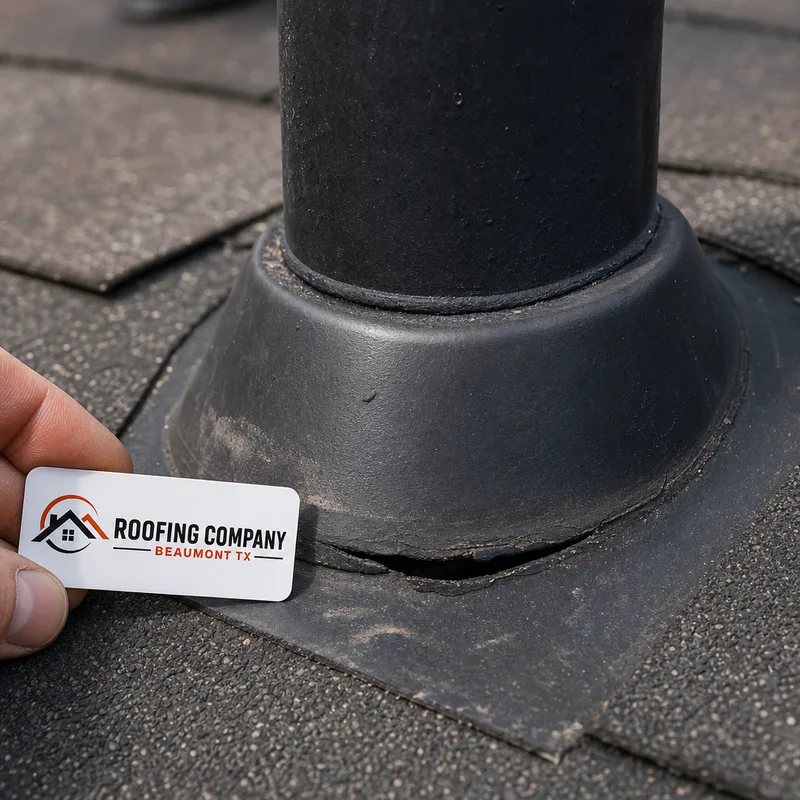
The leak is not always directly above the stain. Water can travel along decking and framing before reaching drywall, so an inspection should cover the roof surface, pipe boots, vents, valleys, and the attic when accessible.
Our Beaumont roofing contractors work locally, so follow-up is available when a storm repair needs another look.
Call (409) 257-3497Protect the structure first
After a strong storm, the fastest path to protecting the structure is often temporary stabilization followed by a written repair plan.
Depending on what the inspection finds, initial work may include:
We document damage with clear photos and notes so you can make decisions quickly, including when coordinating with an insurance adjuster. The written scope reflects the roof’s actual shingle type, flashing details, pitch, and complexity.
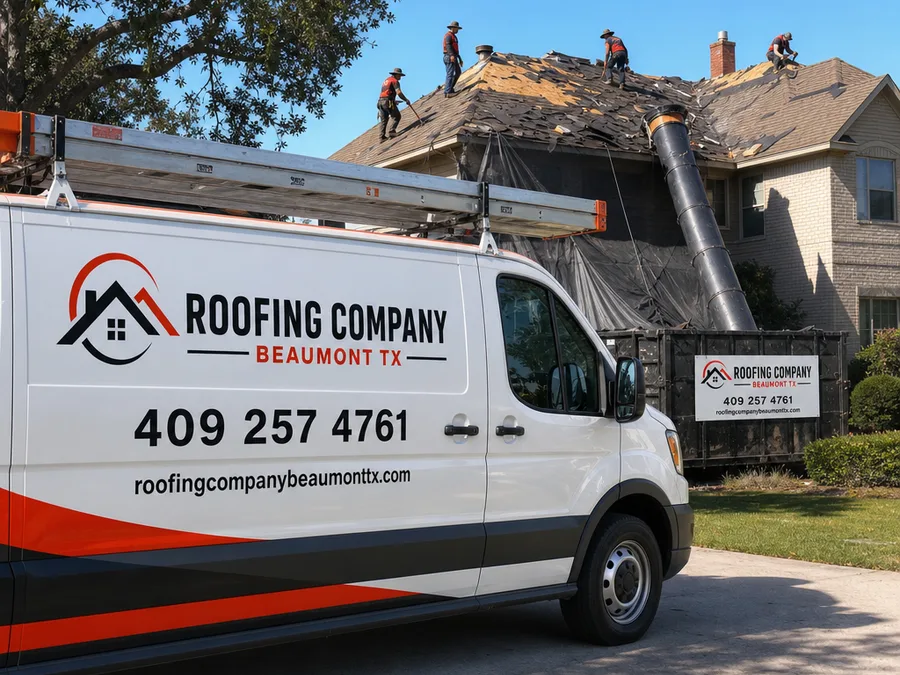
A documented, roof-specific repair
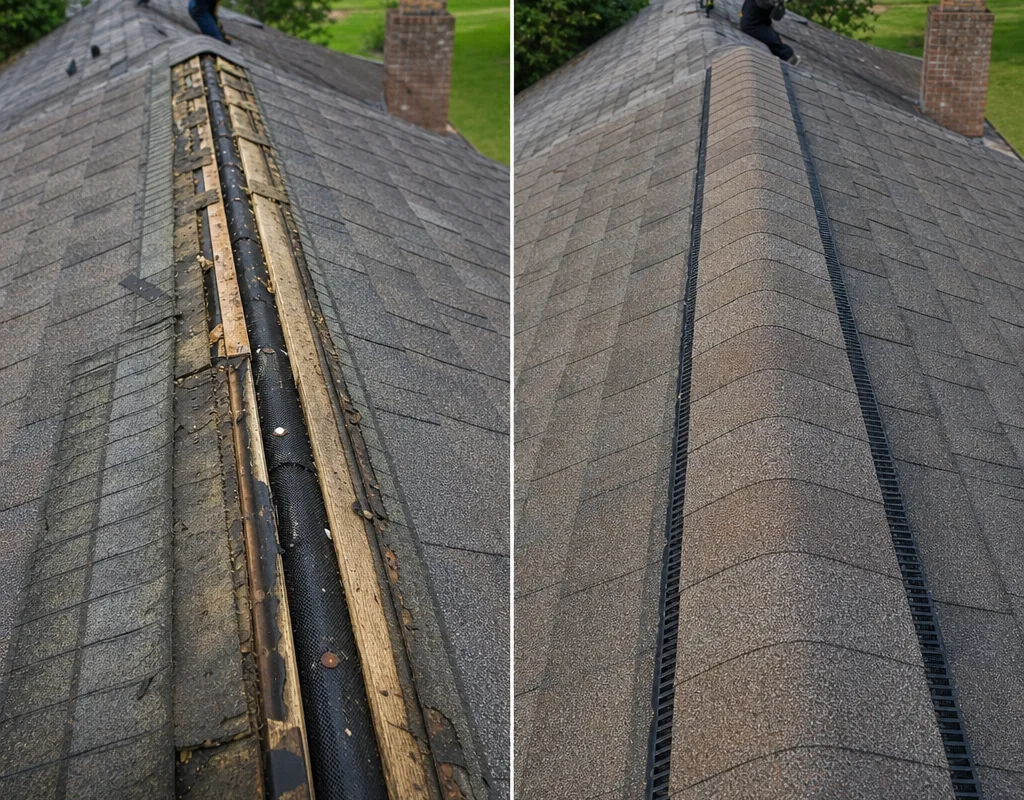
We match the repair to your roof system and the damage pattern, whether that is replacing a defined shingle field, rebuilding a ridge, or correcting flashing that started the leak.
We check pipe boots, ridge vents, valleys, step flashing, and fastener lines. If needed, we verify in the attic so the fix targets the real entry point.
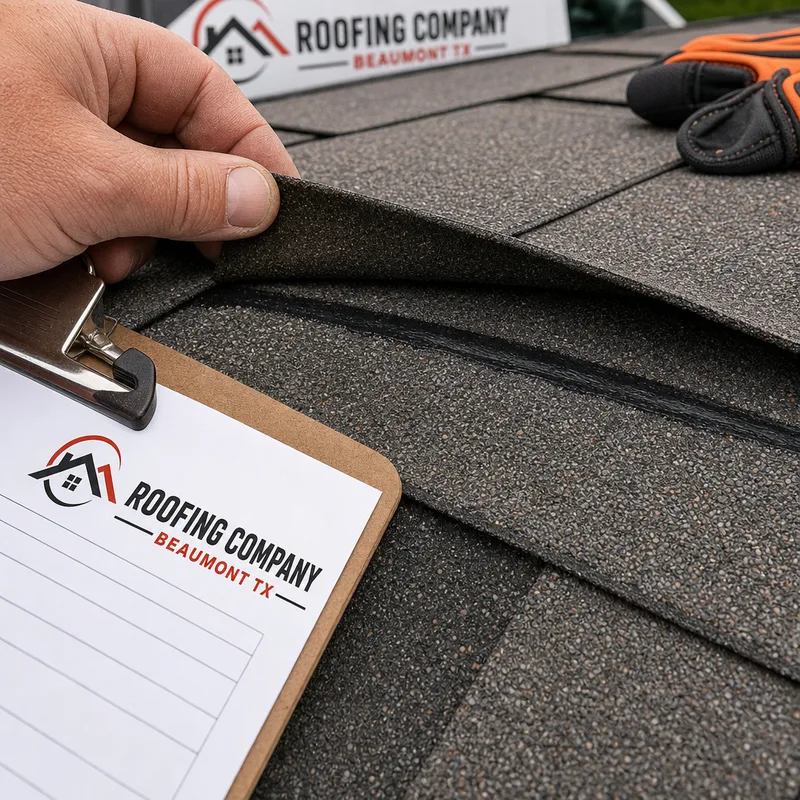
Proper nailing, seal-strip activation, starter course, drip edge, and flashing details matter. A repair should restore wind-resistance details, not just replace what blew off.
We contain tear-off areas, protect landscaping where possible, and finish with careful pickup focused on loose fasteners and small debris.
You receive photos and a clear written scope describing the damage and repair, which helps when coordinating with an insurance carrier or property manager.
Targeted repair or broader restoration
Some roofs need targeted repairs. Others have widespread damage that makes a larger repair area the safer choice. We inspect both visible damage and hidden conditions that can lead to repeat leaks.
We will also explain when brittle shingles, damage across multiple slopes, or repeated failures make a limited repair unlikely to last.
Beaumont’s varied roof ages and styles—from Old Town and the Oaks Historic District to newer Northwest Beaumont construction—can include patched valleys, multiple shingle generations, and legacy flashing details that affect how repairs must tie in.
Inspection to final cleanup
We identify immediate water entry and stabilize the area when permanent repair cannot be completed safely right away.
We record missing or lifted shingles, impacts, displaced flashing, and interior signs with organized photos and notes.
You receive a straightforward plan explaining what will be repaired, the materials involved, and why the scope is sized that way.
We replace damaged components and confirm correct ties into underlayment, starter courses, flashing, and seal lines.
We review repaired areas, share photos, and sweep the work area for nails and small debris.
Plan around the actual damage
Storm damage roof repair typically ranges from $250 to $1,500 for small, localized fixes such as a few shingles or a minor flashing repair. Larger storm repairs often run $1,500 to $6,000 or more when multiple slopes, ridge work, or significant flashing and decking sections are involved.
Final pricing depends on roof type and pitch, the spread of damage, access and safety requirements, material-match availability, and whether decking or flashing requires replacement. The exact scope and cost are confirmed after an on-site inspection.
Workmanship in the field
Common storm repair questions
Response time depends on the size of the storm event, but we prioritize active leaks and exposed areas first so water intrusion does not continue. If immediate repairs cannot be completed safely, temporary stabilization is usually the first step.
Move belongings away from the leak, place a container to catch water, and avoid climbing onto the roof. Document the interior stain and drip points while waiting for an inspection.
We can provide photos and a written scope showing what is damaged and what is required to restore water-shedding details. Coverage decisions and claim terms remain with your insurer.
Hail damage typically shows defined impacts that fracture the shingle mat or dislodge granules, often with corresponding hits on vents, caps, or flashing. Normal wear is generally more uniform and tied to age and exposure.
We make a best effort to match color and profile, but exact matches can be difficult when a shingle line is discontinued or the existing roof has weathered. We explain what match is realistic during the inspection.
Tarping can be safe when installed and secured correctly with attention to wind loads and water flow. It is short-term protection and should be monitored after additional wind or rain until permanent repairs are complete.
Protect the roof before more rain
Schedule an inspection to document the damage, stop active leaks, and receive a written scope you can act on quickly, whether you are paying out of pocket or coordinating with insurance.